
Collection: Glass Tea Sets
16 products
-
Turquoise High Borosilicate Glass Gaiwan Tea Set
 Vendor:Turquoise High Borosilicate Glass Gaiwan Tea SetUmi Tea Sets
- Regular price
-
$99.98 USD - Regular price
-
- Sale price
-
$99.98 USD
Quick view
-
Gold Foil Diamond-Cut Crystal Glass Tea Set
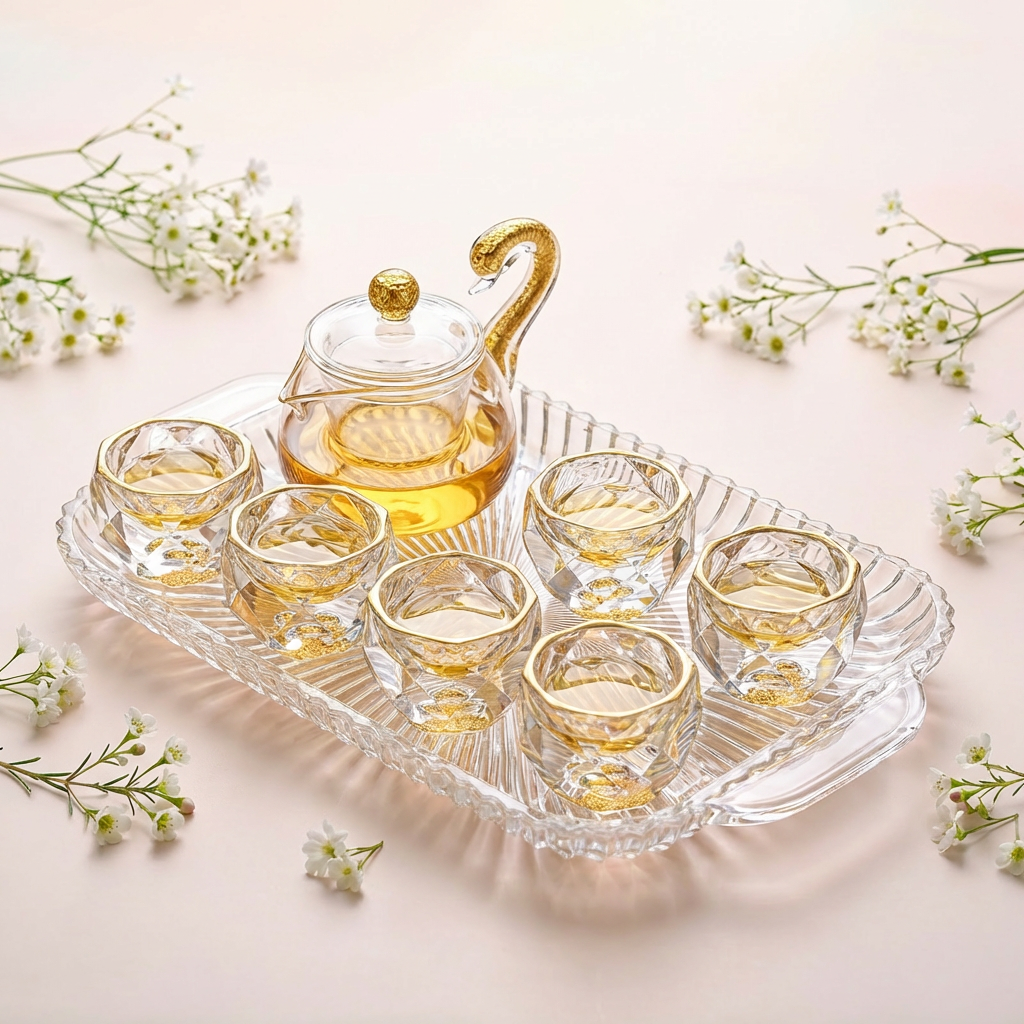 Vendor:Gold Foil Diamond-Cut Crystal Glass Tea SetUmi Tea Sets
- Regular price
-
$119.98 USD - Regular price
-
- Sale price
-
$119.98 USD
Quick view
-
Pink Diamond Crystal Glass Gaiwan Tea Set
 Vendor:Pink Diamond Crystal Glass Gaiwan Tea SetUmi Tea Sets
- Regular price
-
$99.98 USD - Regular price
-
- Sale price
-
$99.98 USD
Quick view
-
Pink Lotus Crystal Glass Tea Set
 Vendor:Pink Lotus Crystal Glass Tea SetUmi Tea Sets
- Regular price
-
$85.98 USD - Regular price
-
- Sale price
-
$85.98 USD
Quick view
-
Silver Plum Blossom Glass Tea Set
 Vendor:Silver Plum Blossom Glass Tea SetUmi Tea Sets
- Regular price
-
$99.98 USD - Regular price
-
- Sale price
-
$99.98 USD
Quick view
-
Cherry Blossom Pink Glass Tea Set
 Vendor:Cherry Blossom Pink Glass Tea SetUmi Tea Sets
- Regular price
-
$96.98 USD - Regular price
-
- Sale price
-
$96.98 USD
Quick view
-
Plum Blossom Ice-Textured Glass Tea Set
 Vendor:Plum Blossom Ice-Textured Glass Tea SetUmi Tea Sets
- Regular price
-
$99.98 USD - Regular price
-
- Sale price
-
$99.98 USD
Quick view
-
Pink Ice Crystal High Borosilicate Glass Tea Set
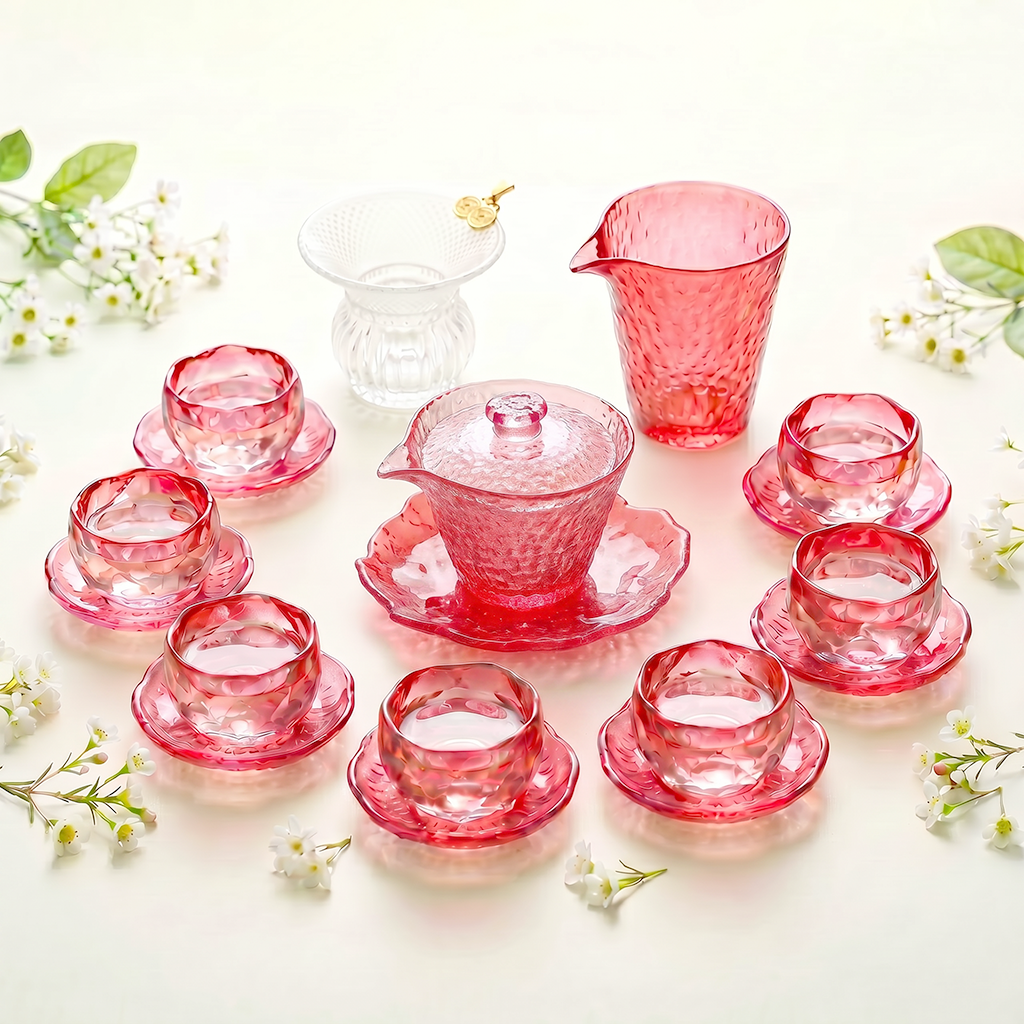 Vendor:Pink Ice Crystal High Borosilicate Glass Tea SetUmi Tea Sets
- Regular price
-
$139.98 USD - Regular price
-
- Sale price
-
$139.98 USD
Quick view
-
Iridescent High Borosilicate Glass Gaiwan Tea Set
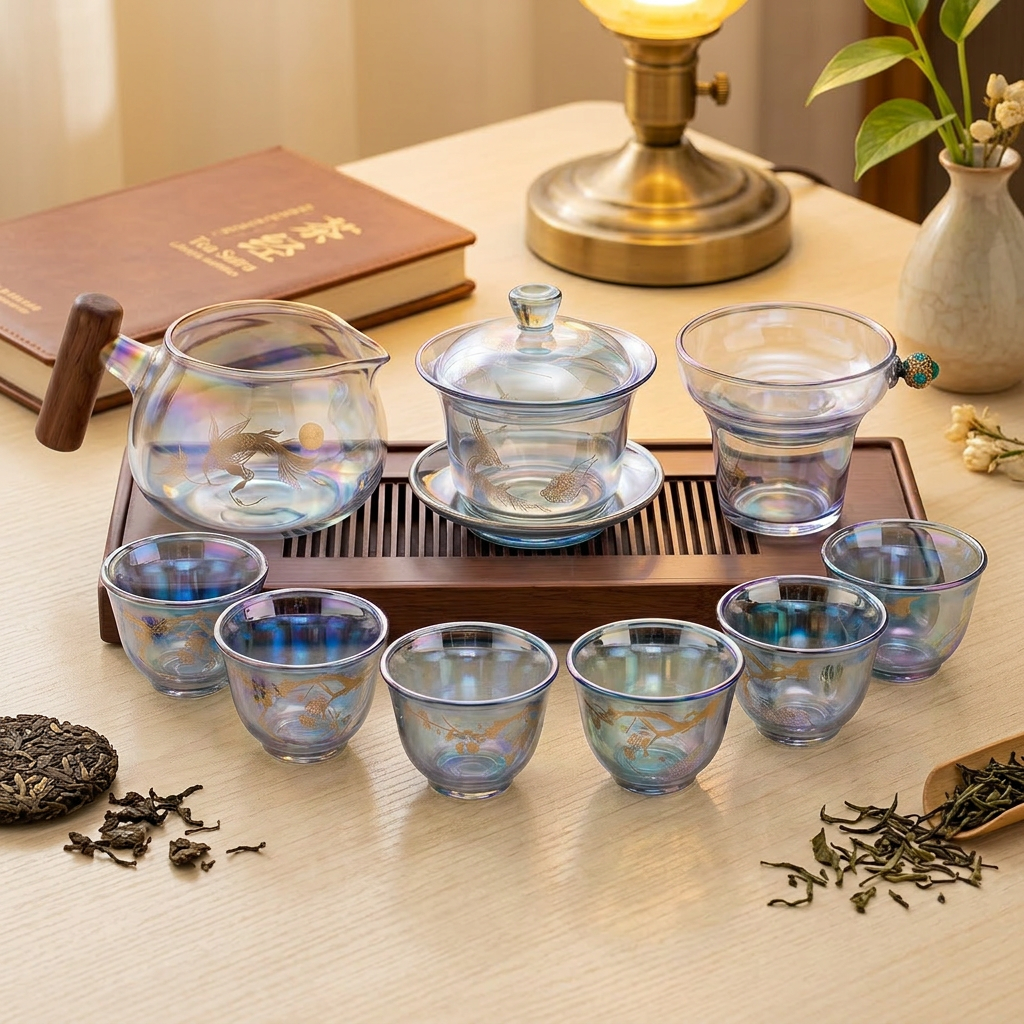 Vendor:Iridescent High Borosilicate Glass Gaiwan Tea SetUmi Tea Sets
- Regular price
-
$152.98 USD - Regular price
-
- Sale price
-
$152.98 USD
Quick view
-
Chrysanthemum Style Glass Tea Set
 Vendor:Chrysanthemum Style Glass Tea SetUmi Tea Sets
- Regular price
-
$145.98 USD - Regular price
-
$175.00 USD - Sale price
-
$145.98 USD
Quick view
-
Glass Flower and Fruit Tea Set
 Vendor:Glass Flower and Fruit Tea SetUmi Tea Sets
- Regular price
-
$119.98 USD - Regular price
-
$145.80 USD - Sale price
-
$119.98 USD
Quick view
-
High Borosilicate Glass Tea Set With Tray
 Vendor:High Borosilicate Glass Tea Set With TrayUmi Tea Sets
- Regular price
-
$101.09 USD - Regular price
-
$121.20 USD - Sale price
-
$101.09 USD
Quick view


What is a Glass Tea Set?
A glass tea set is composed of accessories such as glasses, teapots, tea cups, fair cup, tea strainer, etc., made from glass. Its main purpose is to prepare, hold and brew tea. It is now one of the most popular types of tea ware, both in kitchens, offices, and tea shops. According to the related industry report, world demand for glass tea sets kept increasing from 2021 to 2026, and the total market share of glass tea sets increased annually, plus these tea sets became the core category in tea ware market.
The main materials used in glass tea sets can be divided into two categories: ordinary sodium calcium glass and borosilicate glass. Among them, borosilicate glass tea set occupies a major share of the mid-to-high-end glass tea set market because of its superior performance. Crystal glass tea set is the most popular style among glass tea sets. With its extremely high light transmittance, it has become the first choice for many consumers. A high-quality glass tea set should meet food-contact safety standards, be lead-free and cadmium-free, and release no harmful substances under high temperatures, ensuring safe tea drinking.
Compared with tea sets made from ceramic, Yixing clay, and other materials, the core advantage of a glass tea set lies in its pure material. It does not absorb the aroma or flavor of tea, allowing the original taste of the tea leaves to be restored to the greatest extent. According to international authoritative testing data, the material purity of a high-quality glass tea set can reach more than 99%, and it does not chemically react with tea liquor, making it suitable for brewing all kinds of tea.
When you select a glass tea set, quality can be judged through appearance and simple testing. A high-quality glass tea set has no bubbles or impurities, an even wall thickness, good light transmittance when held against the light, and no obvious color difference. When tapped by hand, it produces a clear and crisp sound without a dull tone. In contrast, low-quality glass tea sets often have bubbles, impurities, uneven wall thickness, and may even contain excessive heavy metals. Long-term use may pose potential health risks. According to related research from Bohe Doctor, low-quality glass tea sets may release heavy metals such as lead and cadmium when exposed to hot tea water, and long-term intake may damage the nervous system and kidney function.
Quality of glass tea set can be identified based on its appearance and simple test method when you select it. A good quality product does not contain bubbles and impurities, has uniform wall thickness, exhibits good translucent against the light and without prejudicial coloring, and sounds nothing dull when clear and crisp when tap by hand. The good quality characteristics of the bottom of the glass tea set are that bubbles and impurities are absent, uniform wall thickness and etc. High content of heavy metal may be detected in bad quality glass tea set and considered as potential health hazards after long-term usage. The related research from Bohe Doctor shows that glass tea set with low quality may leached heavy metals, such as lead and cadmium, against drinking hot tea water, and caused damage to neural and renal circulatory system after long-term consumption.
What Types of Glass Tea Sets are There, What Teas are They Suitable for, and Why?
Glass Tea Sets are mainly classified by material into three types: Sodium Calcium Glass Tea Set, Crystal Glass Tea Set, and High Borosilicate Glass Tea Set. Different materials vary significantly in heat resistance, light transmittance, hardness, and other properties, so they are suitable for different types of tea. The following sections explain the characteristics of each type, the teas they are suitable for, and the reasons behind these choices, based on material properties, practical use scenarios, and data.
High Borosilicate Glass Tea Set
This is currently the most mainstream and cost-effective type of glass tea set, made from high borosilicate glass. The average linear thermal expansion coefficient of high borosilicate glass is 3.3-3.4 x 10⁻⁶ K⁻¹, its thermal shock resistance is ≥280°C, and it can withstand high temperatures of 450°C for long periods. It also has excellent chemical stability, strong acid and water resistance, and is lead-free and cadmium-free, meeting the international ISO 3585 food-contact safety standard. This type of tea ware is suitable for brewing black tea, dark tea, and oolong tea, and can also be used for boiling tea. It is especially suitable for teas that require high-temperature brewing.

The reason why the high borosilicate glass tea set is suitable for these teas lies in its strong heat resistance and stability. Black tea is a fully fermented tea and needs to be brewed with 100°C boiling water to promote the release of beneficial components and ensure a rich, mellow taste. Dark tea is a post-fermented tea. It not only requires 100°C boiling water during brewing, but some varieties also need to be boiled. A high borosilicate glass tea set can be heated directly over an open flame or electric ceramic stove without cracking due to high temperature. Oolong tea is a semi-fermented tea, and its brewing temperature should be kept above 95°C. The heat resistance of a high borosilicate glass tea set can meet this brewing requirement, while its pure material does not affect the high aroma of oolong tea. According to industry statistics, more than 80% of professional tea shops choose high borosilicate glass tea set when brewing black tea and dark tea. In addition, high borosilicate glass is also commonly used to make glass gaiwans and glass fair cups, meeting the professional brewing and tea-sharing needs of various teas.
Sodium Calcium Glass Tea Set
This is the most common and most affordable type of glass tea set, made from ordinary sodium calcium glass. Its main components are silicon dioxide, sodium oxide, and calcium oxide. Because of its low production cost, it accounts for more than 60% of the mid-to-low-end glass tea set market. Its core features are moderate light transmittance, relatively poor heat resistance, and a high thermal expansion coefficient. It can only withstand temperatures of 80-100°C, cannot be heated directly, and may crack easily under sudden temperature changes. It is suitable for brewing green tea, white tea, and yellow tea, and is suitable for simple daily tea-drinking scenarios such as home and office use.

The main reason why the sodium calcium glass tea set is suitable for green tea, white tea, and yellow tea is that it is low-price, simple style and daily casual brewing needs. Meanwhile, its strong light transmittance can ensure the tea drinkers to observe the unfolding of tea leaves and the color of tea liquor. As an unfermented tea with tender leaves, green tea is not resistant to high-temperature when brewed. The temperature should be controlled at 80-85°C. The moderate thermal conducting property of a sodium calcium glass tea set can help prevent scalding tea leaves caused by boiling water and, make the tea taste better. In addition, with a reasonable price, people do not need to worry too much if it breaks off. As a lightly fermented tea, white tea needs to observe the tea leaves unfolding in the process of brewing, so that the brewing time can be judged. This requirement of observing the tea leaves unfolding can be satisfied by the sodium calcium glass tea set, which has a high light transmittance while not absorbing the original fresh sweet taste of white tea. Similar to green tea in processing method, yellow tea with tender leaves can use the sodium calcium glass tea set to allow the user to enjoy the tea unfolding shape and the fresh taste of tea as well. It is also suitable for mass consumers, who are budget-concerned. Figures according to end-user research shows that, considering the daily household use, 70% of glass tea set are made from sodium calcium glass.
Crystal Glass Tea Set
It belongs to the high-end category of glass tea sets and is made from crystal glass. Its core components are silicon dioxide and lead oxide. Lead-free crystal glass uses potassium oxide instead of lead oxide. It has extremely high light transmittance, reaching 92-95%, with excellent gloss, a transparent texture, higher hardness than ordinary glass, and a crisp, pleasant sound when tapped. This type of tea ware is suitable for brewing green tea, white tea, yellow tea, as well as high-end oolong tea and black tea. It is suitable for tea tasting, collection, or formal hospitality occasions.

The reason why the crystal glass tea set is suitable for these teas lies in its excellent light transmittance and visual appeal, it can present much more view of the shape of tea leaf and color of tea liquor to make the tea drinking more interesting. The tea liquor of green, white and yellow tea is clear and bright and leaf shape is more elegant. Brewing an crystal glass tea set, the tea drinker is able to clearly see the tea leaf unfolded slowly in the water and the freshness and tenderness of the tea, the color of high-end oolong tea and black tea is elegant, the color of the tea liquor is rich, while the high light transmittance of crystal glass can better show amber and red color while the fine texture of the crystal glass will make the tasting more enjoyable. Moreover, the crystal glass is pure and has no smell, and will not absorb the flavor, allowing the original taste and aroma of high-end tea leaves to be restored to the greatest extent.
What are the Features of Glass Tea Sets?

Pure material with no odor and no flavor absorption.
The main material of a best glass tea set is silicon dioxide; the purity is more than 99%. The glass tea sets contains no any toxics; it will not have chemical reaction during contact with tea liquor and it will not release any heavy metal or other harmful substances, so it is safe for tea drinking. According to the environment ISO3585, the lead content of best kind of borosilicate glass tea ware should be less than 0.1mg / L, meeting food-contact safety requirements. At the same time, the glassware is non-absorbent of the aroma or flavor of the tea leaves. When a tea is brewed in, it is unnecessary to worry about the flavor switch of different variety teas; totally it will be able to preserve original taste of tea leaves as much as possible; it is one of the core advantages of glass tea set, in comparison with ceramic and Yixing clay Tea ware.
Good Light Transmittance and Strong Visual Appeal
Whether it is transparent glass tea ware or light-colored glass tea ware, the light transmittance is above 90%. Among them, transparent high borosilicate glass tea ware can reach a light transmittance of 92%, and its ultraviolet and infrared transmittance is also between 90% and 92%. When you brew tea, you can clearly observe the unfolding process of the tea leaves, the changing shape and the color of tea liquor most clearly when you are brewing tea. This will definitely impress the tea lovers who love brewing green tea and white tea. As the tea leaves unfold slowly in the water and the tea liquor turns transparent and bright, the eye experience of tea drinking will be better. That's also the main reason why transparent glass tea sets are warmly welcomed by customers. As market research data shows, 68% of customers buy glass tea sets for their good light transmittance and eye appeal.
Heat Resistance Varies Greatly, need to be Distinguished
The heat resistance of a glass tea set mainly depends on its material. Borosilicate glass tea set has excellent heat resistance and a low thermal expansion coefficient. It can withstand a temperature difference from -20°C to 150°C, has thermal shock resistance of ≥280°C, and can be heated directly over an open flame or electric ceramic stove. It is suitable for high-temperature brewing and boiling tea.
Easy Cleaning
Glass has a smooth surface, so tea stains do not easily adhere to it. After each use, most tea stains can be removed by rinsing with warm water, and stubborn tea stains can also be quickly cleaned through simple methods. Compared with Yixing clay tea ware, a Glass Tea Set does not require special maintenance, does not accumulate tea scale over long-term use, and does not easily breed bacteria. According to related research from Bohe Doctor, the surface smoothness of Glass Tea Sets is much higher than that of ceramic and Yixing clay tea ware, reducing bacterial growth by more than 60%, making daily use more hygienic.
Fragility - Requiring Careful Use
Although glass has high hardness, and the tensile strength of high borosilicate glass can reach 35-100 N·mm⁻², its toughness is relatively poor. It is easy to break when impacted or dropped, especially thin-walled glass ta sets, which have a higher risk of breakage. This is the main limitation of glass tea sets. They should be handled and stored carefully in daily use, avoiding collision with hard objects. However, high-quality borosilicate glass tea set has higher impact resistance. Under the same conditions, its wear rate is only one quarter that of ordinary glass, giving it a relatively longer service life.
Tips for Using Glass Tea Sets
Choose a suitable glass tea set according to the type of tea.
When you brew green tea, white tea, and yellow tea, transparent glass tea set is preferred. The material can be ordinary sodium calcium glass, and the brewing temperature should be controlled at 80-90°C. Avoid high-temperature heating. When you brew black tea, dark tea, and oolong tea, borosilicate glass tea set is preferred. It can be used directly with 100°C boiling water. When boiling tea is needed, choose borosilicate glass tea set that can be heated over an open flame. Avoid using ordinary sodium calcium glass tea set to prevent cracking.
Avoid sudden cooling and heating to prevent the tea set from cracking.
Even for borosilicate glass tea set with excellent heat resistance, sudden temperature changes should be avoided as much as possible. Do not pour boiling water immediately into a glass tea set that has just been taken out of the refrigerator. Do not place a glass tea set that has just held boiling water into cold water or onto an icy tabletop. According to GB/T 6579-2007 《Laboratory Glassware - Thermal Shock Test Methods》, high-quality glass products should withstand sudden temperature changes of no less than 200°C. Although borosilicate glass tea set can exceed this standard, frequent sudden cooling and heating will still shorten its service life. Before brewing, rinse the tea set with warm water to preheat the body, reducing the impact caused by temperature differences and lowering the risk of cracking.
Control the brewing water temperature to protect both the tea leaves and the tea set.
Different materials of glass tea sets have different upper heat-resistance limits. An ordinary sodium calcium glass tea set's upper temperature resistance limit is 100°C so it can't be directly heated. The brewing water temperature should be controlled below 80°C. Borosilicate glass tea set is able to sustain high temperature for 450°C, the brewing water temperature should be controlled between 80°C and 100°C. When you brew tender tea leaves, the temperature of water should still be reduced to avoid scalding the leaves. For instance, controlling the water temperature to 80-85°C is able to keep the freshness of the green tea and prevent it from having bitter feeling. Controlling the water temperature to 100°C can help to release the nutrients of black tea and enrich the mellow body of tea liquor.
Handle gently and store correctly.
Glass tea sets are fragile, so they should be handled gently in daily use and protected from strong impact or drops. When taking or placing the tea ware, do not hold only the rim with one hand. Instead, hold the body or base of the cup to prevent the rim from breaking under stress. When storing, place the Glass Tea Set on a stable tabletop and avoid placing it near the edge. A non-slip mat can be placed underneath to prevent sliding and falling. When stacking multiple Glass Tea Sets, place a layer of soft cloth between them to avoid surface scratches or breakage from friction and collision. If the tea ware will not be used for a long time, clean it thoroughly, dry it upside down, and store it in its packaging box to prevent dust accumulation and damage.
Since glass tea set is fragile, it should be gently treated and avoid from be subjected to strong bump or a drop in use. When taking or putting the tea set, do not pick up with basic hold of 'rim, with one hand'. Hold the body or bottom of the cup to prevent the rim from fracture under pressure. In storage, place the glass tea set on a stable tabletop and not near the edge. Place a small non-slip mat underneath to prevent sliding and dropping. The stacking of glass tea set should be separated by a layer of soft cloth to avoid scratching the surface from friction and impact. If it is going to be idle for long term, rinse and clean it with warm water, then dry it upside down, store it in its original packaging box to prevent residual dust and damage.
Choose high-quality lead-free and cadmium-free products to ensure safe tea drinking.
When you purchase a glass tea set, give priority to products with food-contact safety certification. Check the product label and confirm that the material is high borosilicate glass or food-grade sodium calcium glass, and that it is lead-free and cadmium-free.
Avoid holding strong tea or acidic drinks for too long.
Although glass tea sets are resistant to acid and alkali, holding strong tea or acidic drinks for a long time may cause tea stains to adhere to the surface and become difficult to clean. Acidic drinks may also slightly corrode the glass surface and affect light transmittance. It is recommended to pour out the remaining tea liquor and clean the tea ware promptly after each tea session. Do not leave strong tea or acidic drinks in a Glass Tea Set for more than four hours. In addition, do not use glass tea sets to hold high-temperature oils or corrosive liquids, as this may damage the tea set.
Regularly check the condition of the tea set and replace it in time.
During daily use, regularly check whether the glass tea set has cracks, damage, or star-shaped cracks, especially at the rim and base of the cup. These areas concentrate stress and are more likely to break. If cracks are found, even very small ones, stop using the tea ware immediately to avoid breakage during use, which may scratch the hands or cause burns. According to industry recommendations, the service life of glass tea sets is 2-3 years. After six months of use, if the tea ware becomes less transparent or develops a foggy appearance, it should be replaced in time to avoid bacterial growth.
How to Clean Glass Tea Sets
Daily cleaning is suitable for simple cleaning after each use. It is easy to operate, quickly removes surface tea stains, and prevents tea stains from building up. After each tea session, immediately pour out the remaining tea liquor and tea leaves. Rinse the inner and outer walls of the tea set with warm water at around 50°C. During rinsing, use a soft brush or sponge to gently wipe the surface and remove attached tea stains. Do not use steel wool, hard brushes, or other hard tools, as they may scratch the glass surface and make tea stains easier to adhere to. After rinsing, place the tea ware upside down in a ventilated area to dry, or wipe it dry with a clean soft cloth to maintain its transparency. According to statistics, glass tea sets cleaned promptly after each use can reduce tea stain accumulation by more than 80% and extend service life by 30%.
Daily cleaning is suitable for single simple cleaning after each use. It is easy to operate, can quickly remove the surface tea stain, and avoid the buildup of tea stain. Carry out the following steps after brewed tea: Pour out existing tea liquor and tea leaves; Rinse the inside and outside wall of tea set in warm water about 50℃; Use soft brush or sponge to wipe the surface during rinsing to remove the attached tea stain. Do not use steel wool, hard brush or other hard instrument for fear of scratching the glass surface and facilitating the attachment of tea stain. Rinse the tea set and then place it upside down in a vented place to dry or wipe dry with soft cloth to retain transparency. Daily cleaning of glass tea set soon after every time of usage results in reducing the tea stain accumulation more than 80% and allowing the service life prolonged by 30%.
Stubborn tea stain cleaning. Used when tea stains have persisted and accumulated over a period of time, rather than being easily removed after each use. Food grade cleaning materials are used so it is residue free and safe and non damaging to the tea set.
The first way is clean in baking soda. Take 1 to 2 g baking soda and mixed with warm water at right amount, stir up uniformly then pour into the glass tea set. Soak in 15 to 20 minutes. During soaking, fluid baking soda will be in good contact with tea stains because you should shaken gently the tea set with baking soda. After watch, gently cleaned by soft brush, tea stains can be removed. Finally, wash off in warm water thoroughly. Baking soda is a food-stuff of clean materials which has neither surface coating nor leaving surface residues and there is no reaction with glass, suitable for all kinds of glass tea sets.
The second way is cleaning with white vinegar. Mix edible white vinegar and water in ratio of 1:2. Pour the mixture into the glass tea set and heat to 60°C. Then let it stand for 20 min. Acetic acid can dissolve the alkaline tea scale deposit, so it is more suitable for the thick layer of tea scale. After soaking, use a gentle brush to scrub the inner wall of the tea set to remove the tea stain. Run cold and hot water to wash three times repeatedly to prevent the white vinegar leaving which will affect the taste of the next tea. Keep in mind, this method is not recommended for frequent use because the high temperature may affect the strength of cup body. Use it if 1-2 times per month is enough.
The third way is cleaning with salt mixed with lemon juice. Take a proper amount of salt and lemon juice, mix them and make a polishing paste, then dip a soft cloth into the paste, apply to and polish the stubborn tea stains on the inner wall of glass tea set, and finally rinse with warm water. The polishing of salt can clear the stubborn tea stains, while lemon juice can remove the smell of tea stains and increase the light transmittance of tea ware. So this method is suitable for cleaning transparent glass tea set.
Limescale cleaning is suitable for glass tea sets with limescale on the inner wall due to water flowing from tap water for many years. The main ingredients of limescale are calcium carbonate and magnesium hydroxide. These can be dissolved in acid. The first method is using citric acid to clean. Take 1g citric acid, and dilute it into 500ml warm water, then get the solution mixed evenly. Pour the solution into the glass tea set, so that the limescale can dissolve for half an hour. Then rinse the tea set with warm water. The second method is boiling water cleaning. Put the glass tea set in a pot, then add some water, boiling for 10-15 min. It can cause the limescale to be loosen and fall to the bottom of the pot as the water boiling. Then get the tea set out and rinse it by warm water. But borosilicate glass tea set can be boiled directly, however, with ordinary sodium calcium glass tea set, boiling is not allowed, because the tea set may be cracked.
After cleaning, don't put the cleaned glass tea set into the anti-closed container immediately. Wash and dry with a soft cloth or air dry upside down in an unclosed place in the ventilated place to avoid water marks or bacteria breeding. The colored glaze of the glass tea sets should always avoid using strong acidity cleaner. Hydrogen peroxide cotton pads can be used in local to wipe, to prevent the glaze falling off. The glass tea set which will not used for a long time should be cleaned thoroughly, and completely dry, and stored in the packaging boxes to avoid dust and breakage.
Make sure when cleaning glass tea set use no fragrance or preservativeblessed cleaners. These cleaners may carry residual smell into the tea set and influence the aroma of tea as well as corrode the surface of glass set. When there are scratches on the surface of glass tea set, put a small portion of toothpaste into the scratched area and wipe gently with a soft cloth. It can slightly smooth the scratches and recover the light transmittance of the tea set.