
Collection: Yixing Tea Sets
20 products
-
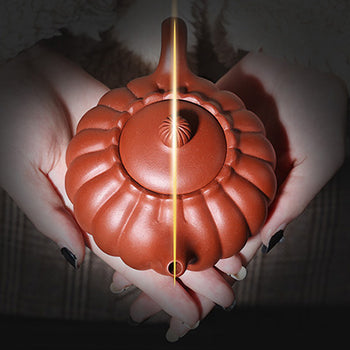
Yixing Zhu Ni Clay Gourd Tea Set
 Vendor:Yixing Zhu Ni Clay Gourd Tea SetUmi Tea Sets
- Regular price
-
$228.98 USD - Regular price
-
- Sale price
-
$228.98 USD
Quick view
-
Yixing Purple Clay Five Blessings Tea Set
 Vendor:Yixing Purple Clay Five Blessings Tea SetUmi Tea Sets
- Regular price
-
$199.98 USD - Regular price
-
- Sale price
-
$199.98 USD
Quick view
-
Yixing Purple Clay Tea Set With Peony Incense Holder
 Vendor:Yixing Purple Clay Tea Set With Peony Incense HolderUmi Tea Sets
- Regular price
-
$218.98 USD - Regular price
-
- Sale price
-
$218.98 USD
Quick view
-
Yixing Purple Clay Four Seasons Tea Set
 Vendor:Yixing Purple Clay Four Seasons Tea SetUmi Tea Sets
- Regular price
-
$218.98 USD - Regular price
-
- Sale price
-
$218.98 USD
Quick view
-
Yixing Purple Clay Dragon Tea Set
 Vendor:Yixing Purple Clay Dragon Tea SetUmi Tea Sets
- Regular price
-
$168.00 USD - Regular price
-
$199.50 USD - Sale price
-
$168.00 USD
Quick view
-
Purple Clay Flowers Automatic Tea Set
 Vendor:Purple Clay Flowers Automatic Tea SetUmi Tea Sets
- Regular price
-
$158.98 USD - Regular price
-
$189.60 USD - Sale price
-
$158.98 USD
Quick view
-
Purple Clay Dragon And Phoenix Automatic Tea Set
 Vendor:Purple Clay Dragon And Phoenix Automatic Tea SetUmi Tea Sets
- Regular price
-
$198.98 USD - Regular price
-
$238.90 USD - Sale price
-
$198.98 USD
Quick view
-
Purple Pottery Dragon Automatic Tea Set
 Vendor:Purple Pottery Dragon Automatic Tea SetUmi Tea Sets
- Regular price
-
$217.98 USD - Regular price
-
$261.50 USD - Sale price
-
$217.98 USD
Quick view
-
Yixing Purple Clay Fu Character Tea Set
 Vendor:Yixing Purple Clay Fu Character Tea SetUmi Tea Sets
- Regular price
-
$163.85 USD - Regular price
-
$195.60 USD - Sale price
-
$163.85 USD
Quick view
-
Yixing Purple Clay Xi Shi Stripes Tea Set
 Vendor:Yixing Purple Clay Xi Shi Stripes Tea SetUmi Tea Sets
- Regular price
-
$127.98 USD - Regular price
-
$153.60 USD - Sale price
-
$127.98 USD
Quick view
-
Purple Clay Winter Plum Automatic Tea Set
 Vendor:Purple Clay Winter Plum Automatic Tea SetUmi Tea Sets
- Regular price
-
$121.54 USD - Regular price
-
$145.50 USD - Sale price
-
$121.54 USD
Quick view
-
Yixing Purple Clay Winter Plum Tea Set
 Vendor:Yixing Purple Clay Winter Plum Tea SetUmi Tea Sets
- Regular price
-
$109.96 USD - Regular price
-
$129.50 USD - Sale price
-
$109.96 USD
Quick view


What is a Yixing Tea Set?
For centuries, tea master and tea enthusiasts the world over have sought the perfect method of preparing leaf tea. Either as part of a ritual or simply to obtain the best possible beverage, each culture has developed its own art of tea, adapted to its specific lifestyle. Of course, the practice of drinking tea is essentially to enhance and develop the preparation of leaf tea and adapt it to daily consumption. The tea set is best suited to this purpose. Here, then, is an overview of different kinds of Yixing tea sets, some of which are linked to a specific culture or ritual.
Earthenware Yixing tea sets come from the Chinese county of the same name. Thanks to the porous nature of the clay from which they are made, they have the capacity to "remember" the teas that have been infused in them, and so they are called "memory teapots."
Objects fashioned from clay date back to the Han dynasty (206 BCE to 220 CE), but it was in the middle of the Ming dynasty (1368-1644), around 1500, that a significant production began. Toward the end of the 17th century, Yixing teapots arrived in Europe. High demand from European clients led Chinese craftspeople to create some of their pieces with them in mind. Yixing is a town in Jiangshu Province, to the west of Shanghai. Famous for the quality of its clay as well as for the incredible creativity of its potters, Yixing still produces tea sets that enjoy a solid reputation in China and abroad. The center of production is in Dingshan, a community close to Yixing. In addition to the small workshops of craftspeople who work entirely by hand, there are large manufacturers who mass-produce tea sets. Yixing purple clay tea sets are particularly suited to the preparation of black, wulong and Pu er teas.
What are the Features of Yixing Tea Sets?
Its malleability, which makes it easy to work with and has allowed craftspeople to develop a technique to make the tea sets entirely by hand. Note that Yixing teawares are rarely formed using a pottery wheel; they are usually shaped by hand.
Its porous quality, which means that a Yixing tea set should only be used for a single family of teas.
Its high concentration of ferrous oxide is easily visible on the surface of the tea set.
The clay is made from rocks that are extracted, crushed, cleaned, kneaded and sifted, then mixed together. The colors of the three types of Yixing clay vary according to where and from what depth the rocks were extracted, as well as the firing method used by the potter. The sound made by the teapot when it is tapped gently with its lid is also distinctive and can often be a test of quality. The sound should be clear and metallic.
When they are hot, the sides of a Yixing teapot absorb the tannins in the tea, creating a deposit that builds up over successive infusions. This is how the memory teapot acquires its coating. The more the teapot is used, the better it will reveal the wealth of aromas in the teas infused in it.
If a Yixing teapot for the gong fu cho ceremony is well made, it will conform to the three-level rule: the tip of the spout and the top of the handle will be level with the rim of the teapot In addition, the lid should fit the opening in the teapot as closely as possible, so it does not move, and the handle and spout should be perfectly aligned.
The seal (or signature) of the potter is printed on each teapot. It is usually on the bottom of the teapot or under the lid, and sometimes it is under the handle.
How Many Types of Clay are Used for Yixing Tea Sets? What are the Differences, and Which Teas are They Best for?
The raw mineral clays used for a Yixing tea set are generally classified by mining layer, mineral composition, and firing color. The mainstream categories are Zi Ni, Hong Ni, Lü Ni, and Duan Ni. In the market, there are around 15 commonly used sub-types suitable for making tea sets. Different clays vary in shrinkage rate, firing temperature, particle size, and breathability, which directly affect the teas they suit and the difficulty of maintenance. Below is a detailed breakdown of the commonly used clays, their characteristics, and their recommended uses.
I. Zi Ni Series (紫泥)
(Market mainstream, most widely applicable, first choice for beginners)
Zi Ni comes from the middle layer of the Yixing clay ore strata on Huanglong Mountain. It has a high iron content, relatively large particles, and a complete, breathable dual-porosity structure. It is the most commonly used clay for making a Yixing Tea set. When fired it turns to a beautiful purple-brown or reddish-brown. The clay is very stable and has a high finished-product ratio.

1. Ordinary Zi Ni (普通紫泥)
Core Characteristics: It is produced in the middle layer of the mineral layer, with a uniform purple-brown tone, moderate particle size, loose body structure, smooth air convection, and rapid changes after soaking and conditioning. The firing temperature is 1120 to 1150°C, the shrinkage rate is 12% to 15%. It is easy to process and stable in mass production.
Suitable Teas: All Pu-erh teas, lightly roasted oolong, Longjing, flower tea, Biluochun, black tea, and green tea.
User Experience: Ordinary Zi Ni is durable and forgiving. It is not picky about tea or maintenance conditions. Even with casual daily use, it can naturally develop a patina. After 3 to 6 months of continuous use, the surface gloss of the tea set will become noticeably better. It is ideal for beginners and for everyday use.
2. Di Cao Qing (底槽青)
Core Characteristics: The raw material from the bottom layer of the purple clay ore contains bluish-green, chicken-eye and cat-eye-shaped mineral spots. Its texture is pure and delicate, making it a high-quality variety of purple clay. Firing temperature is 1130 to 1160℃, with a shrinkage rate of 10% to 13%. After firing, it turns a deep reddish-liver color with a stable and dignified appearance.
Suitable Teas: All Pu-erh teas, lightly roasted oolong, Longjing, flower tea, Biluochun, black tea, and green tea.
User Experience: After being steeped and aged, the Di Cao Qing will turn a dark, antique liver color with a warm and full-bodied texture. When brewing ripe Pu-erh tea, it can effectively reduce the musty taste and make the tea soup smoother. It is recommended to brew only one type of tea to avoid cross-contamination of flavors, which can cause the patina to darken.
3. Qing Shui Ni (清水泥)
Core Characteristics: Pure raw Zini clay processed directly without any additives. It was also commonly used in ancient pottery making. Its moisture level is easy to control, and it has high shaping stability. Aged clay must be reworked before use, otherwise black edges or mixed-color patches may appear. Firing temperature is 1120-1150°C, with a shrinkage rate of 13%-16%. Its clay color is simple and antique, and after use it develops a reddish, rustic glow.
Suitable Teas: All Pu-erh teas, lightly roasted oolong, Tieguanyin, flower tea, black tea, green tea, Longjing, and Biluochun.
User Experience: Qing Shui Ni feels warm and smooth in the hand, is easy to clean, and does not easily retain stubborn tea stains. It is especially suitable for office use. It develops a patina faster than ordinary Zini, and the first visible results can usually be seen after 1 to 2 months.
4. No. 2 Zi Ni (二号紫泥)
Core Characteristics: Contains a relatively high proportion of hematite, giving it a purplish-red or reddish-brown color. The clay is fine, even, highly plastic, and the body is compact. Firing temperature is 1140-1170°C, with a shrinkage rate of 11%-14%. Its gloss is better than that of ordinary Zini.
Suitable Teas: Oolong tea, Pu-erh tea, black tea, and green tea.
User Experience: No. 2 Zini has a bright color and is better at bringing out tea aroma. It suits highly aromatic teas particularly well. After use, it develops an obvious shine and offers both visual appeal and practicality.
II. Hong Ni Series (红泥)
(Bright in color, high in shrinkage, and often used for small-capacity tea sets)
Hong Ni has a relatively high iron oxide content. In its raw state, it is as hard as stone. It is sensitive to firing temperature and has a higher shrinkage rate than Zi Ni. After firing, it usually appears red or orange-red. Its color changes strongly when exposed to hot water, becoming brighter with use.

1. Ordinary Hong Ni (普通红泥)
Core Characteristics: The raw ore appears pale grass-green. It is fired at a relatively low temperature and is suitable for making small tea sets. Firing temperature is 1080-1110°C, with a shrinkage rate of 18%-22%. If the temperature is too low, the color becomes dull yellow-orange; if too high, the piece may deform or collapse.
Suitable Teas: Oolong tea, Tieguanyin, rock tea, and Pu-erh tea.
User Experience: Small Hong Ni tea sets feel comfortable in the hand. When brewing Tieguanyin, they release aroma more fully. The color-changing effect is obvious, and after 1 to 2 months the tea set will show a noticeably deeper tone. During use, sudden temperature changes should be avoided to reduce the risk of deformation.
2. Zhu Ni (朱泥)
Core Characteristics: A premium type within Hong Ni. It belongs to clayey mudstone, has a soft cinnabar-red tone, a dense and smooth body, and an extremely high shrinkage rate. It cannot be used to make large tea sets and is limited to small tea sets. Firing temperature is 1050-1080°C, with a shrinkage rate of up to 30% and a finished-product rate of about 70%. After firing, the tea set surface shows fine wrinkled lines.
Suitable Teas: Tieguanyin, Taiwan high mountain tea, raw Pu-erh, lightly roasted oolong, and Longjing.
User Experience: A Zhu Ni tea set is made for highly aromatic teas. Its aroma-gathering effect is much stronger than that of other clays. When brewing high mountain tea, it can hold the aroma inside the tea set very well. Its drawback is fragility. Cold water must never be poured directly over a hot tea set, or it may crack easily. The initial seasoning process must also be done more carefully.
3. Da Hong Pao (大红袍)
Core Characteristics: A top-grade material within Zhu Ni. The raw ore is yellow and comes from Zhaozhuang Mountain in Dingshan. Its shrinkage rate is nearly three times that of Zi Ni. The clay is dense, and the tea set feels heavy in the hand. Firing temperature is 1060-1090°C, with a shrinkage rate of 28%-32%. After firing, it appears bright red and richly textured.
Suitable Teas: Lightly roasted oolong, medium- to heavily roasted Tieguanyin, and all Pu-erh teas.
User Experience: After long-term use, Da Hong Pao becomes bright red like cinnabar and develops an excellent patina. When brewing heavily roasted teas, it can greatly improve the thickness and richness of the tea liquor. The tea set must always be preheated before use so that a cold tea set does not affect the taste of the tea.
4. Hong Pi Long (红皮龙)
Core Characteristics: Formerly called wild mountain red clay. It is rare and mined below the yellow stone layer. The clay is reddish-brown in raw form and turns true red after firing, while preserving a complete dual-porosity structure. Firing temperature is around 1100°C, and shrinkage rate is 15%. Its breathability is better than that of ordinary Hongni.
Suitable Teas: Pu-erh teas, Tieguanyin, semi-fermented tea, dark tea, lightly roasted oolong, green tea, Longjing, and black tea.
User Experience: Hong Pi Long is the most durable variety within the Hongni family. Its breathability is balanced, and it is not picky about the degree of tea fermentation. It does not make green tea taste stuffy, and it can reduce astringency when brewing dark tea. It offers both appearance and practicality.
5. Jiang Po Ni (降坡泥)
Core Characteristics: Jiang Po Ni is a common symbiotic clay within the Hong Ni family. It comes from the Jiangpo excavation area located between Huanglong Mountain and Qinglong Mountain, and is formed as a natural combination of Qing Shui Ni and Ben Shan Lüni. Its raw color is orange-red with a yellowish tone, and the texture is fine and delicate, containing particles of Hong Ni, Zi Ni, and Duan Ni. It is typically fired at 1120–1150°C, with a shrinkage rate of 18%–22%. After firing, the surface develops a rich, moist sheen. Its dual-porosity structure remains open and breathable, giving it a strong ability to absorb tea oils.
Suitable Teas: Rock tea, oolong tea, all types of Pu-erh tea, black tea, and dark tea. It is especially well suited to medium - to heavily roasted Tieguanyin and aged ripe Pu-erh.
User Experience: Jiang Po Ni is one of the more versatile clays in the Hong Ni family. After long-term use, it develops layered color variations and a deep, aged character, with a texture that comes close to the old clays seen in the Ming and Qing periods. Compared with ordinary Hongni, it is more resistant to sudden temperature changes and is moderate in maintenance difficulty, so even beginners can use it with confidence. When used for aged ripe Pu-erh, it can noticeably improve the lingering sweetness of the tea liquor.
III. Lü Ni Series (绿泥)
(Rare raw material, fresh in color, and excellent in breathability)
Lüni is mainly produced in Huanglong Mountain, Dingshu, Yixing. The raw ore is pale green. Its fired color changes with temperature: low-temperature firing gives a beige tone, suitable temperatures give a yellowish-brown tone, and high-temperature firing produces a bronze-like tone. The ore reserves are limited, making it a relatively rare clay.

1. Ben Shan Lü Ni (本山绿泥)
Core Characteristics: A high-quality Lü Ni material belonging to sheet-like mixed clay. The raw ore surface is as smooth and delicate as a shell and contains almost no sandy particles. Firing temperature is 1100-1130°C, with a shrinkage rate of 12%-15%. After firing, it appears yellow-green, with clear particles and rich texture.
Suitable Teas: Lightly roasted oolong, medium- to heavily roasted Tieguanyin, all Pu-erh teas, black tea, and green tea.
User Experience: Ben Shan Lü Ni has a fresh appearance and is especially suitable for brewing green tea and white tea, making the liquor taste cleaner and fresher. It must be kept away from grease during maintenance. Once oil sticks to the surface, it is difficult to remove and will directly affect both color and patina.
2. Mo Lü Ni (墨绿泥)
Core Characteristics: The raw ore is dark green, sticky, fine, and dense. It requires precise firing temperatures and is prone to deformation during firing. Firing temperature is 1110-1140°C, with a shrinkage rate of 14%-17%. Low-temperature firing produces beige or light yellow, while high-temperature firing gives a greenish tone.
Suitable Teas: Oolong tea, Pu-erh tea, green tea, and black tea.
User Experience: Mo Lü Ni has a delicate texture and develops a soft glow after use. It is suitable for lightly fermented teas. High-quality Mo Lü Ni tea sets are produced in small quantities, so buyers should make sure the material is genuine raw ore.
3. Sesame Lü Ni (芝麻绿泥)
Core Characteristics: The raw ore is bluish-green. After firing, the body is covered with many black sandy speckles, and it is divided into white-sesame clay and red-sesame clay. Its texture is bold and rustic. Firing temperature is 1100-1130°C, with a shrinkage rate of 13%-16%. It has a strong ability to absorb tea oils.
Suitable Teas: Dark tea, ripe Pu-erh, and oolong tea.
User Experience: Sesame Lü Ni has a strong granular feel. When brewing ripe Pu-erh, it can enhance the thickness of the liquor. Its appearance is distinctive and suits people who prefer a rougher, more rustic style.
IV. Duan Ni Series (段泥)
(A symbiotic ore with rich colors and excellent patina development)
Duanni, formerly called Tuan Ni, is a symbiotic ore formed by the natural combination of Zi Ni, Lü Ni, and Hong Ni. It has relatively large particles, a loose structure, and a very obvious dual-porosity structure. In the past, low-temperature firing often caused black spotting, but this problem has now been completely solved through high-temperature kiln firing. After firing, it usually appears satin yellow or bluish gray.

1. Old Duan Ni (老段泥)
Core Characteristics: Made from aged Duan Ni material with high ore purity, calm color, rich particles, and excellent breathability. Firing temperature is 1130-1160°C, with a shrinkage rate of 12%-15%. It does not develop black spotting, and its patina changes significantly over time.
Suitable Teas: Pu-erh teas, Tieguanyin, semi-fermented tea, dark tea, lightly roasted oolong, green tea, Longjing, and black tea.
User Experience: Old Duan Ni is the most practical variety within the Duan Ni family. It is easy to maintain, not picky about tea, and suitable for both home and office use. With long-term use, it develops a warm and mellow patina. It is the best entry-level choice for beginners who want a Duan Ni tea set.
2. Golden Duan (黄金段)
Core Characteristics: A symbiotic ore that fires into a golden yellow to bright yellow color. Its particles are clearly visible, and it has strong tea-enhancing performance, effectively bringing out aroma. Firing temperature is 1120-1150°C, with a shrinkage rate of 11%-14%. It has a bright appearance and strong visual appeal.
Suitable Teas: Raw Pu-erh, Fenghuang Dancong, oolong tea, and green tea.
User Experience: Golden Duan has a vivid color that sets off the color of the tea liquor beautifully, making it especially suitable for fragrant teas with a fresh style. During maintenance, it should be cleaned regularly to prevent tea scale from building up and darkening the color.
3. Sesame Duan (芝麻段)
Core Characteristics: Duan Ni mixed with black sandy particles. After high-temperature firing, it becomes dark brown, with a rough granular texture and strong absorptive ability. Firing temperature is 1130-1160°C, with a shrinkage rate of 13%-16%. It can effectively absorb tea impurities.
Suitable Teas: Dark tea, ripe Pu-erh, and heavily fermented tea.
User Experience: Sesame Duan performs best with heavily fermented teas. It can soften miscellaneous flavors and make the liquor smoother. Its look is niche and distinctive, suitable for users who want something more individual.
4. Qicai Duan and Xiehuang Duan (七彩段、蟹黄段)
Core Characteristics: These are artificially blended Duanni clays. Xiehuang Duan appears orange-yellow, while Qicai Duan contains multicolored particles and has strong plasticity. Firing temperature is 1120-1150°C, with a shrinkage rate of 12%-15%. Their performance is basically the same as natural Duanni.
Suitable Teas: Oolong tea, black tea, green tea, and Pu-erh tea.
User Experience: The main advantage of these Duan Ni types is visual appeal. Their practicality is no different from Old Duan Ni, making them suitable for users who prefer beautiful tea ware. Their maintenance method is exactly the same as that of natural Duanni.
The Benefits of Using Yixing Clay Tea Set to Brew Tea.
1. Yixing clay tea set is suitable for tea. The double porosity of Yixing clay tea set would keep the original flavor of tea.
2. The Yixing clay tea set has its own unique function to absorb the tea soup. After being used for a long time, it can produce a more mellow taste when brewing tea. Even you just pour hot water into the teapot without tea leaves, the water has strong tea flavor. This is impossible for glass tea set and other tea set.
3. It keep tea warmer for longer. Because there are many bubbles in the inner wall of Yixing clay, the bubbles are filled with stagnant air. This air forms an insulator, which can keep the temperature better.
4. It has strong adaptability to hot and cold changes. When we poring the hot water into it , there is no need to worry about the rapid change of temperature and cracking, the heat transfer of clay is slow, so it will not hurt you hands and fingers, and it's a good item to warm your hands in winter.
5. Tea doesn't go bad overnight. It can greatly delay the moldy deterioration of tea in the Yixing clay tea set.
6. There are various minerals and trace elements in Yixing clay tea set, which is good for health.
7. Tea brewed in this kind of tea set will have better flavor, color and smell, which other kinds of tea sets cannot achieve. Even under the hear-wave in summer, the flavor of tea do not change a bit for several days.
8. The Yixing clay tea set look gorgeous and it is a practical kit. Also, it combines elegant style, practical uses and beautiful patterns. It is better if you keep it for a long time or give it to others as a high-class gift.
How to Select a Chiense Yixing Tea Set?

1. Observe the Appearance
Besides material, the type, appearance and character of Chinese Yixing tea set are also very important. Compared with the high-quality Yixing tea set, the poor tea set is rigid and stiff. Because it is machine-made, and it does not focus on the details of lines, so it looks vulgar.
2. Feel the Texture
Pick up a Chinese Yixing tea set, first thing is to observe it, then you should touch with the hand. If necessary, you can pasted your face to feel it. Because the Yixing purple clay soil contains a considerable proportion of sand, so you skin would feel comfortable and warm when you touch it. The tea set made in other clay looks smooth. But in fact, it feels astringent and greasy to when you hold in hand. In addition, compared with other kinds of clay, Yixing clay has a distinctive feature that it feels different. Touching yixing clay is like touching bean paste by hand, which is thin but not greasy. Therefore, for a Yixing tea set, the touch feeling of the tea set is particularly important.
3. Listen to the Sound
The high quality and authentic Chinese Yixing tea sets are made by hand, hammered and pressed for many times, and then goes through several processes. After firing, the sound of knocking is relatively clear. When other clay tea set is only made from the model, so the sound will be dull. The sound of Yixing tea set should be combined with many factors. If the sound is too sharp, it is mostly a new tea set. If it is extremely sharp and crisp, it may be made of chemical mud.
4. Look at the Internal Structure
It is difficult to see the handmade trace after several processes in Chinese Yixing tea set. However, some signs can be found by carefully observing and touching the inside of the tea set. Because it is difficult for the tea set maker to make the inside of the tea set smooth.
How to Nourishing Your Yixing Clay Tea Set?
The core logic of nurturing a Yixing tea set is to allow the tea set's dual pores to absorb tea oils evenly and gradually form a natural, translucent patina, while protecting the clay structure from damage. There are no complicated operations involved. As long as the steps are followed properly, the tea set can steadily develop a high-quality patina. The following methods are practical and based on long-term use, with no vague steps, so they can be followed directly.
I.Initial Seasoning for a New Yixing Tea Set (A necessary step to remove impurities and earthy odor)
A new Yixing tea set may still carry kiln dust, mineral powder, and an earthy smell inside. If used directly, these can affect the taste of the tea. That is why it must be seasoned before use. The purpose of seasoning is to open the pores, remove impurities, and help the tea set absorb and stabilize tea aroma.
1. Room-Temperature Rinsing
Rinse the inside and outside of the tea set under running room-temperature water. Use a soft toothbrush to gently clean the rim, base, lid gap, and other corners where residue may remain. The rinsing process should last 1 to 2 minutes. No detergent should be used at any stage.
2. Warm-Water to Soaking to Clay
Prepare warm water at 40-50°C and fully submerge the tea set for 30 minutes. This softens any remaining mineral residue inside the body and allows the pores to begin opening, preparing the tea set for later absorption of tea oils.
3. Boiling-Water Expansion
Remove the tea set from the water and slowly pour 100°C boiling water over the inside and outside of the tea set. Repeat this 3 to 5 times. The heat fully opens the dual pores and thoroughly removes earthy or kiln-fired odors.
4. Tea-Liquor Aroma Setting
Choose the tea you plan to brew in this tea set long term. Brew a strong tea with boiling water, fill the tea set with the tea liquor, and let it soak for 2 hours. This allows the tea set to absorb the initial aroma of that tea and reduces the chance of flavor mixing later.
5. Natural Drying
Pour out the tea liquor, wipe away surface moisture with a soft cotton cloth, and place the tea set in a ventilated area away from direct sunlight. Let it dry naturally for 12 hours. After that, it is ready for normal use.
User Experience: During the entire seasoning process, dish soap and steel wool must never be used. These can block the pores and permanently reduce breathability. If the tea set is seasoned with the same tea it will later be used for, the patina color will become more even and will not develop blotchy patches.
II. Daily Usage Rules (The key stage for speeding up patina development)
1. One Tea for One Tea Set
One Yixing tea set should be dedicated to one tea only. For example, a Pu-erh tea set should be used only for Pu-erh, and a Tieguanyin tea set should be used only for Tieguanyin. Mixing different teas in the same tea set is not recommended. According to experience, mixed use slows patina development by about 30%, darkens the surface, reduces gloss, and may also cause flavor contamination.
2. Always Preheat the Tea Set
Before brewing, rinse the tea set with boiling water for about 10 seconds to preheat it. This helps release the aroma of the tea while also preventing a cold tea set from being shocked by boiling water. For high-shrinkage clays such as Zhu Ni and Da Hong Pao, this step must never be skipped.
3. Leave a Little Tea Behind
After finishing the tea, leave 1 to 2 sips of tea liquor at the bottom instead of pouring the teapot completely dry. Let it sit for 5 to 10 minutes so the liquor can naturally moisten the base, then pour it out and let the teapot dry. This helps the base develop patina faster and prevents uneven color between the upper and lower parts of the teapot.
4. Match the Water Temperature to the Tea
Use water at 85-90°C for green tea and white tea so that delicate leaves are not scalded. Use 100°C boiling water for Pu-erh, oolong, and dark tea in order to fully release their inner substances while also keeping the teapot's color stable.
III. Daily Cleaning Methods (Simple and effective, without damaging the clay)
1. Clean Immediately
After drinking tea, rinse the inside of the tea set with boiling water while it is still warm. Tea scale will come off naturally, and the tea set wall can be gently brushed with a soft brush. There is no need to scrub hard. Cleaning while warm is the key to preventing stubborn tea stains.
2. Never Use Cleaning Agents
Dish soap, hand soap, laundry detergent, and other chemical cleaners must never be used. Chemical substances can block the pores and leave a permanent odor that cannot be removed.
3. Removing Stubborn Tea Stains
If long-term buildup creates stubborn tea stains, mix edible alkali with warm water to make a 5% solution, soak the tea set for 10 minutes, and then clean it with a soft brush. This method is safe and will not damage the tea set. Steel wool and hard brushes must not be used, as they will scratch the surface permanently.
4. Standard Drying
After cleaning, wipe off the moisture with a soft cotton cloth and let the tea set dry in a ventilated place. Do not store it in a sealed container or drawer, otherwise humidity may cause mold or unwanted odor.
IV. Long-Term Care Tips (For faster patina development and better texture)
1. Wipe and Polish Frequently
After using the tea set each day, gently wipe the surface with a clean soft cotton cloth. The mild heat generated by friction helps tea oils enter the pores more quickly. With one month of consistent care, the tea set will show a visible increase in gloss and a more even patina.
2. Avoid Environmental Damage
Do not place the tea set in direct sunlight, as ultraviolet light can fade the color and dry out the patina. Do not leave it in a greasy kitchen, since oil stains are difficult to remove and will darken the clay. Avoid contact with perfume, mothballs, and other strong-smelling items, because a Yixing tea set can absorb odors and permanently affect the taste of tea.
3. Let the Tea Set Rest and Dry
After 3 to 5 consecutive days of use, allow the tea set to dry completely for 24 hours. This lets the pores breathe fully and release internal moisture, resulting in a clearer, brighter patina rather than a dull or blackened one.
4. Prevent Physical Damage
After firing, the body of a Yixing tea set is relatively brittle. Avoid bumps and drops. Once cracks appear, they cannot truly be repaired, and they may trap dirt and bacteria, affecting normal use.
V. Common Mistakes to Avoid
1. Mistake: Soaking the Tea Set in Tea for Too Long
Some people believe the longer the tea set is soaked in tea, the faster it will develop a patina.
Correction: If soaked for more than 4 hours, the tea set body becomes saturated with water and can no longer continue absorbing tea oils. It may also breed bacteria and develop a musty smell, which is counterproductive.
2. Mistake: Using Rough Cloth or Hard Brushes
Some people wipe the tea set with coarse fabric or stiff brushes.
Correction: This damages the patina that has already formed and leaves permanent scratches. Only soft cotton cloths and soft-bristle toothbrushes should be used.
3. Mistake: Using the Same Care Method for All Clays
Some people assume every clay type can be maintained in the same way.
Correction: Zhu Ni and Da Hong Pao must avoid sudden temperature changes; Lü Ni must avoid grease; Duan Ni must avoid long exposure to strong sunlight. Only by adjusting maintenance according to the clay type can the best results be achieved.
4. Mistake: Deep Cleaning Too Often
Some people do a full deep cleaning after every use.
Correction: Daily rinsing with boiling water is enough. Over-cleaning removes tea oils from the tea set body and slows down patina development.
User Experience: There is no shortcut to nurturing a Yixing tea set. There is no need to chase speed. As long as you use it correctly, clean it properly, and let it dry well, an even and mellow patina can form in 3 to 6 months. Patina is the natural result of regular use. Normal tea brewing and normal care are enough. The more the tea set is used, the smoother it feels, and the better the tea tastes. That is the unique value of a Yixing tea set.
Where to Buy Authentic Yixing Tea Set?
An authentic Yixing tea set must meet three core conditions: original ore clay from Huanglong Mountain in Yixing, handmade by craftsmen, and accompanied by authoritative qualification certificates. None of these three can be missing. It is difficult for ordinary platforms and scattered stores to provide complete guarantees at the same time.
Overseas buyers who want to purchase authentic Yixing tea set made of original ore, handmade and with certificates, you have been to the right place and right brand - Umi Tea Sets.
As a professional Yixing tea sets brand targeted at tea lovers around the world, all Yixing tea sets of Umi Tea Sets are from the original origin in Yixing. We adhere to the use of original ore materials and handmade craftsmanship by craftsmen, provide complete qualification certificates, and support cross-border direct mail. They are suitable for daily use, office tea tasting, gift-giving and collection.
Our Yixing tea sets are made of 100% authentic original Yixing ore, rejecting chemical clay and non-local ore. We only use original purple clay ore from Huanglong Mountain mining area in Yixing, covering mainstream high-quality clay such as purple clay, vermilion clay, Dahongpao clay, duan ni, green ni and so on. Each type of clay has natural components and genuine air permeability.
Our Yixing tea sets are handmade by famous local craftsmen in Yixing, rejecting machine-cast products. Each of our Yixing tea sets is hand-blanked, shaped, carved and fired by senior local craftsmen in Yixing. They have a regular shape, smooth lines and exquisite details. The tea set body retains the handmade texture, with uniform density and high heat resistance. It is not easy to crack due to sudden cold and heat, and its hand feel and practicality are far superior to mass-produced machine products.
Each of our Yixing tea sets is equipped with an exclusive certificate, which clearly marks the type of clay, craftsman information, production process and brand authenticity statement. It is traceable from raw materials to finished products, allowing you to buy clearly and use at ease, and completely avoid the market traps of "fake masters, fake handmade products and fake clay".
We provide a variety of styles, including large-capacity Yixing tea sets and small Yixing tea sets. With rich clay types and diverse shapes, they can match different teas such as Pu'er tea, Oolong tea, black tea, green tea and white tea, meeting various scenarios such as daily brewing, gift-giving and collection.
As a professional cross-border Yixing tea sets brand, we provide stable international shipping, complete after-sales service and clear product information. There is no need for intermediaries, no need to bear the risk of authenticity, and overseas users can directly purchase authentic Yixing tea sets of the same quality as those from the original origin in Yixing.